Hydraulic Work Over

Lifting Solutions

Click here for HWO Case Study

What Is Hydraulic Workover?

Hydraulic Workover (HWO) is a well-intervention method used to perform maintenance, repair and other operations on an existing oil or gas well.

A Hydraulic Workover Unit (HWU) is a portable, self-contained system that uses hydraulic power to run equipment and tubulars into and out of a well. Unlike a conventional drilling rig, an HWO unit can be used for specific well-intervention activities without requiring a full drilling rig.

Simply put, think of a Hydraulic Workover Unit as a specialist system that helps operators work on an existing well.

Before the actual well intervention can begin, the HWO package must first be transported to the platform, lifted into position and assembled over the well. This is where offshore lifting support becomes an important part of the operation.

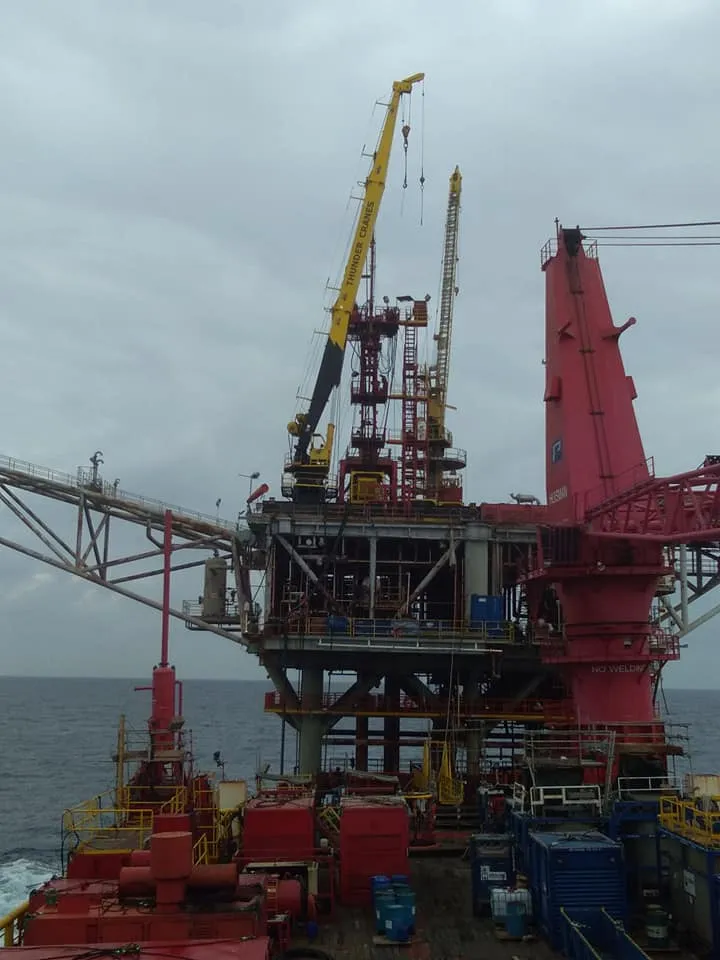
Thunder crane Dubai HWO operations on yellow offshore oil platform with lifting equipment over ocean

Why Does Hydraulic Workover Need Crane Support?

A Hydraulic Workover Unit consists of multiple components that must be transported and assembled on the offshore platform. Some of these components can be heavy and require significant lifting capacity. However, not every offshore platform has a crane capable of handling these loads.

An existing platform crane may have limited lifting capacity or insufficient reach. In some situations, the crane may be unavailable or unsuitable for the specific lifting requirements. This creates a simple problem:

The HWO equipment needs to reach the platform — but the existing crane may not be capable of lifting it.

Thunder Cranes provides temporary and modular offshore crane solutions to help overcome this challenge.

How Does Thunder Cranes Assist With Hydraulic Workover?

Thunder Cranes provides offshore rental cranes and experienced crane crews to support Hydraulic Workover operations.

The crane can be used to lift and position components of the HWO unit during rig-up and rig-down. It can also support the movement of tools, materials and supplies between a supply vessel and the offshore platform.

Once the HWO unit is installed and ready for operation, the crane can continue supporting the project by loading and offloading equipment and supplies.

This means the crane is not simply used for one large lift. It can become part of the wider logistics and lifting support system throughout the HWO campaign.

Thunder Cranes has provided crane and crew support for HWO operations on a 24-hour basis, including a Dubai project where its support continued for eight years. The crane was also used for other offshore activities, including Coiled Tubing Unit operations and platform crane change-outs.

What Does the HWO Process Look Like?

For someone unfamiliar with oil and gas operations, the process can be simplified into five steps:

01 – The Well Needs Work – An existing oil or gas well requires maintenance, intervention or another specialist operation.

02 – The HWO Unit Arrives – The Hydraulic Workover Unit is transported to the offshore platform in separate components.

03 – The Crane Lifts the Equipment – Thunder Cranes provides the lifting capacity required to move HWO components from the supply vessel onto the platform and position them where they are needed.

04 – The HWO Unit is Rigged Up – The components are assembled and positioned over the well so that the well-intervention operation can begin.

05 – The Crane Continues Supporting the Operation – Throughout the project, the crane can assist with equipment, tools and materials moving between the vessel and platform.

The HWO unit works on the well.
The crane helps get the equipment where it needs to be.

When Is a Temporary Crane Needed?

An offshore platform may already have a crane, but that does not necessarily mean it can support every HWO operation.

A temporary crane may be required when:

  • The existing platform crane has insufficient lifting capacity
  • The crane does not have enough reach
  • Heavy HWO components need to be lifted from a supply vessel
  • Equipment needs precise positioning on the platform
  • The existing crane is unavailable or unsuitable
  • Additional lifting capacity is required during the project

Thunder Cranes’ original HWO project highlights this exact challenge: temporary rental cranes can support an existing platform crane when additional capacity or reach is required for well-intervention work.

Thunder Crane HWO offshore support operations with yellow lifting equipment on industrial ocean platform

Why Use a Modular Crane?

A modular crane can be transported in sections and assembled where it is needed. This can provide a practical alternative to bringing a large crane barge or liftboat to the offshore platform. For suitable projects, this approach can reduce the need for larger marine lifting assets while providing the lifting capacity required for the operation.

Thunder Cranes’ experience also shows that the same rental crane can support multiple offshore activities rather than being limited to one task. This flexibility can be particularly valuable for long-duration projects where equipment, materials and personnel need to move between supply vessels and offshore platforms throughout the campaign.

Need Hydraulic Workover Lifting Support?

Every offshore platform has different lifting capacity, deck space, access restrictions and equipment requirements.