Solutions

Coiled Tubing Unit

Offshore Lifting Support

What Is a Coiled Tubing Unit?

A Coiled Tubing Unit (CTU) is a specialized piece of oil and gas well-intervention equipment used to perform work inside an existing well without necessarily requiring a conventional drilling rig.

Unlike traditional jointed pipe, coiled tubing is a continuous length of steel pipe that is stored on a large reel. The tubing can be transported, positioned and continuously fed into a well using an injector system.

Simply put, think of a CTU as a system that allows operators to safely insert and retrieve a long, continuous pipe from an oil or gas well.

Coiled tubing can be used for a variety of well-intervention activities, including well maintenance, cleaning, stimulation and other operations where access to the well is required.

For offshore operations, however, getting the CTU equipment onto the platform can present a significant lifting challenge. A coiled tubing reel alone can weigh many tonnes, while offshore platforms may have limited deck space and cranes with insufficient lifting capacity.

This is where specialist lifting support becomes important.

How Does Thunder Cranes Support Coiled Tubing Operations?

Thunder Cranes provides portable and modular crane solutions to help move and position CTU equipment during offshore well-intervention projects.

A typical CTU package can include a large coiled tubing reel, injector and other supporting equipment. These components need to be transported from a supply vessel onto the offshore platform and then positioned correctly for the operation.

Thunder Cranes’ modular cranes can provide the additional lifting capacity and reach required when the existing platform crane is not capable of handling the CTU equipment.

For example, in one offshore project, the platform had only a 1.8-ton jib crane, while the coiled tubing reel weighed approximately 16 tons. Instead of relying on a large crane barge, Thunder Cranes provided a portable modular crane solution that could be transported by a smaller supply vessel, assembled offshore and used to lift the CTU equipment onto the platform.

The modular approach can also help overcome restricted deck space and difficult offshore logistics. Thunder Cranes’ cranes are designed to be transported in sections, assembled on location and configured around the specific requirements of the platform.

When the Platform Crane Is Not Big Enough

One of the easiest ways to understand the value of a modular crane is to look at the difference between the existing lifting capacity and the actual project requirement.

Imagine an offshore platform has a crane capable of lifting only 2 tonnes.

The CTU equipment arrives on a supply vessel.

The coiled tubing reel weighs 16 tonnes.

There is a problem.

The platform has a crane—but it cannot lift the equipment required for the job.

Instead of mobilizing a large crane vessel or barge, a portable modular crane can be brought to the platform and assembled specifically for the required lifting operation.

Thunder Cranes’ self-lifting solutions can also be used where an existing platform crane is too small, unavailable or unsuitable for installing the rental crane.

Supporting the CTU From Vessel to Well

One of the easiest ways to understand the value of a modular crane is to look at the difference between the existing lifting capacity and the actual project requirement.

Imagine an offshore platform has a crane capable of lifting only 2 tonnes.

The CTU equipment arrives on a supply vessel.

The coiled tubing reel weighs 16 tonnes.

There is a problem.

The platform has a crane—but it cannot lift the equipment required for the job.

Instead of mobilizing a large crane vessel or barge, a portable modular crane can be brought to the platform and assembled specifically for the required lifting operation.

Thunder Cranes’ self-lifting solutions can also be used where an existing platform crane is too small, unavailable or unsuitable for installing the rental crane.

The lifting process can be thought of as a simple chain:

SUPPLY VESSEL

CTU equipment arrives offshore

THUNDER CRANE

Heavy equipment is lifted from the vessel

OFFSHORE PLATFORM

Equipment is positioned and assembled

COILED TUBING UNIT

Injector and tubing are positioned over the well

WELL INTERVENTION

Thunder Cranes can support this process with modular rental cranes, crane operators and detailed lifting plans tailored to the offshore platform and project requirements.

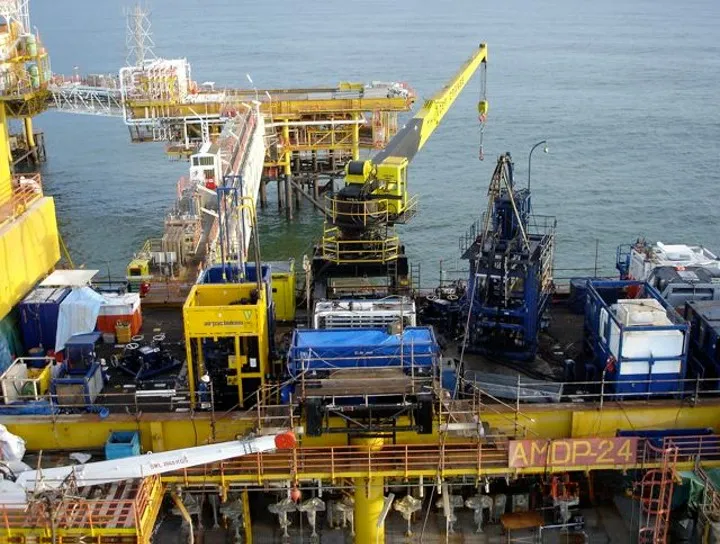
In another Thunder Cranes project in Dubai, limited space meant that two adjacent platforms had to be used. TC90 and TC20 modular cranes were coordinated between the platforms to move and support the coiled tubing equipment, including transferring the coiled tubing pipe between platforms so it could be run through the injector. The two cranes were rigged up and load tested within seven days.

Why Modular Cranes Make a Difference

Offshore lifting is not simply about having a crane with a large lifting capacity.

The crane must have the appropriate capacity, reach, footprint, configuration and installation method for the platform.

Thunder Cranes’ modular approach provides flexibility for projects where:

  • Existing platform cranes have insufficient lifting capacity
  • The platform has limited deck space
  • Heavy CTU equipment must be lifted from a supply vessel
  • Equipment must be positioned accurately on deck
  • A large crane vessel or barge would be costly or impractical
  • The platform has limited or no conventional lifting capability

By selecting a crane that is appropriately sized for the project, operators can avoid using unnecessarily large lifting equipment while maintaining the lifting capability required for the job. Thunder Cranes describes this approach as a cost-effective alternative to larger vessel or barge crane solutions in suitable offshore applications.

Coiled Tubing Unit Lifting: Simply Explained

If you have never worked in oil and gas, the easiest way to understand the operation is this:

The CTU is the equipment used to get continuous tubing into and out of a well.

The crane is what helps get the heavy CTU equipment into position.

Thunder Cranes does not perform the well-intervention work itself. Instead, its role is to provide the lifting equipment, planning and operational support needed to help the CTU package reach the offshore platform and be positioned safely for the work.

From lifting a heavy reel from a supply vessel to supporting the installation of the injector, the crane becomes an important part of the logistics behind the well-intervention operation.

The Right Lift for the Right Offshore Project

Every offshore platform is different. Available deck space, crane capacity, lifting radius, equipment weight and access conditions all influence how a CTU project should be executed.

Thunder Cranes starts by assessing the lifting requirements, platform information and project schedule before developing a suitable lifting solution. Depending on the project, this can include site assessments, lifting plans, crane positioning, engineering calculations, rig-up planning and offshore crane operators.

The result is a lifting solution designed around the actual platform—not simply a standard crane delivered offshore.

Need Lifting Support for Your Coiled Tubing Project?

Whether your offshore platform has limited lifting capacity, restricted deck space or challenging equipment-access requirements, Thunder Cranes can help assess the lifting challenge and develop a modular crane solution.

Let’s discuss your offshore lifting requirements.

Red coiled tubing equipment lifted by Thunder Crane yellow machinery on offshore drilling platform deck
TC20 supporting coiled tubing offshore
Case Study